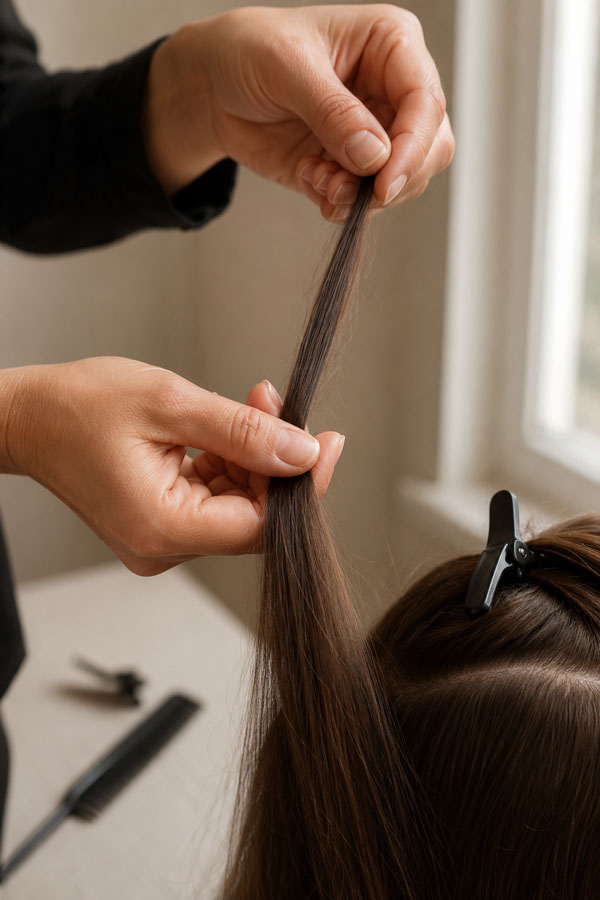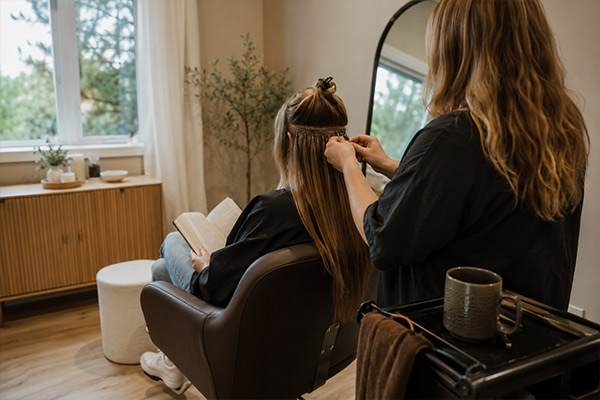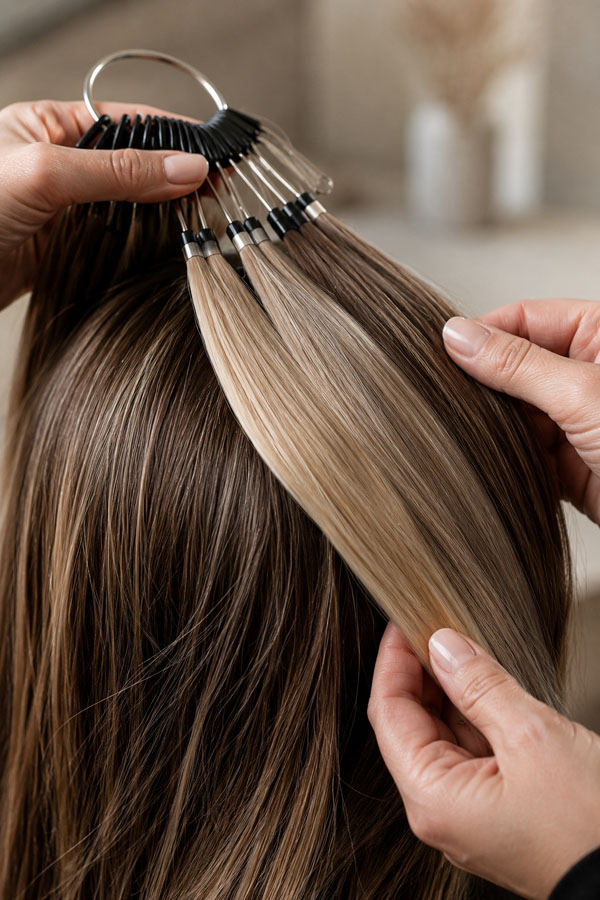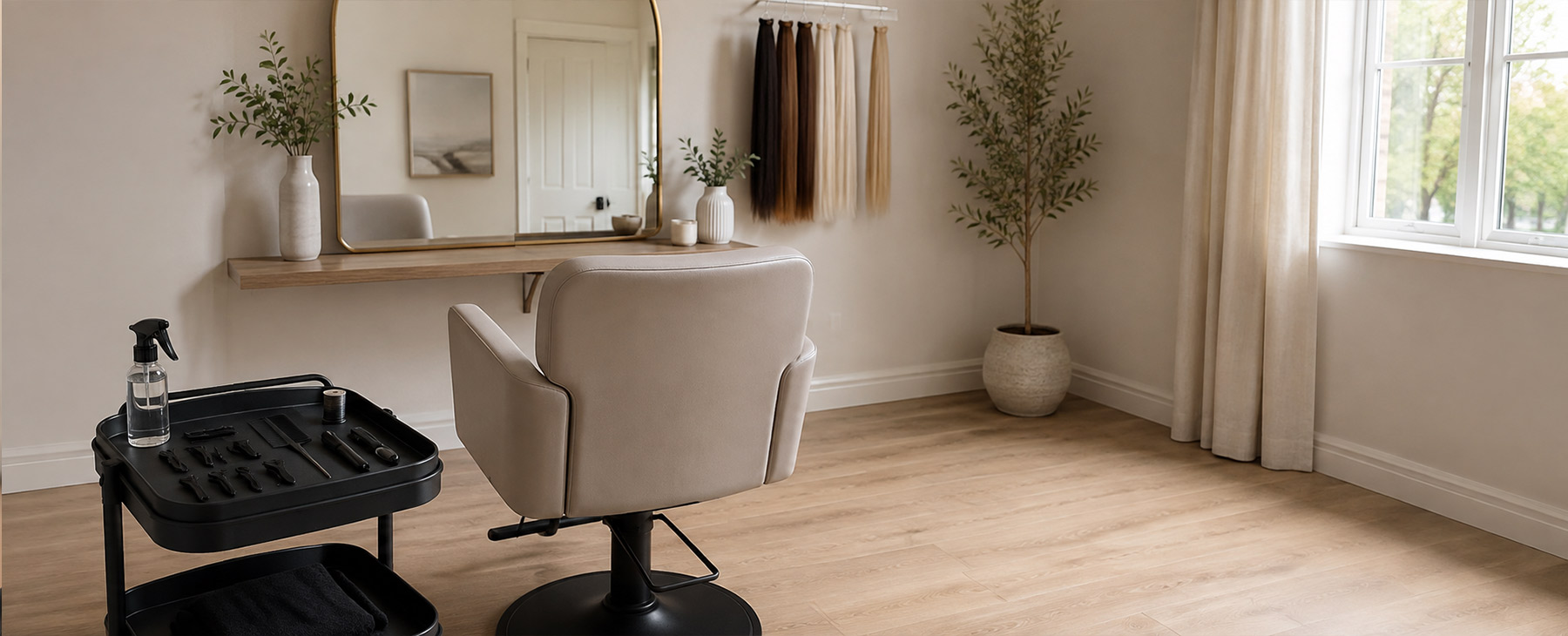
A private one-chair hair extension studio set up and ready at Foster & Length Studio in Lake Country, BC
The Process, Lake Country BC

What it is actually like to sit through one of these

Every studio website tells you the steps. Almost none of them tell you what the afternoon feels like: how long you are in the chair, whether you can look at your phone, whether anyone else is in the room, and what happens at the point where your hair is in sections and you are trying not to look.

Foster & Length Studio is a private hair extension studio in Lake Country, BC. One chair, one person, by appointment only, so there are no walk-ins and nobody else in the room while you are in it.

The decisions have already been made by this point. Method, colour and price were all settled at your consultation. This page is about the day itself.

1
Chair, and one person in the room
2–4 hrs
Install day, cut and finish included
1–2 hrs
A move-up, every 4–6 weeks
0
Other clients waiting on you

From the front door to the mirror

Two to four hours depending on the method and how much hair is going in. You will know which one you are booked for before you arrive.

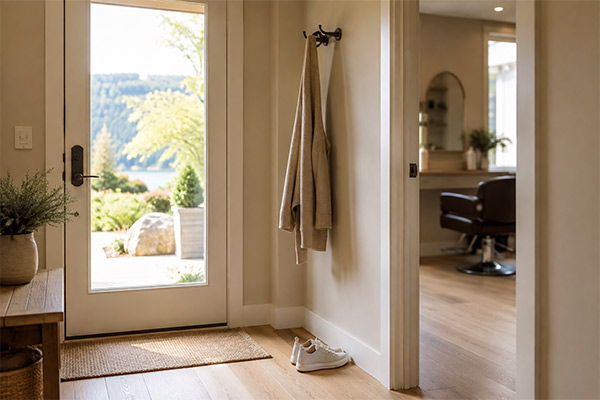
01 The entrance to a private home hair studio, seen from just inside the door

You arrive, and there is no reception

It is a house. You come in the door, your coat goes on a hook, and there is nobody at a desk to check you in because there is no desk and no one to sit at it. That catches people out on a first visit and it is usually the moment they relax.

There is one chair. It is yours for the whole appointment, and nobody is waiting for it after you.

Your part: arrive with your hair down. Bring something to drink if you are particular about it.
02 Hair being washed and prepared at the start of an extension appointment

Hair gets washed and dried out properly

Nothing goes onto hair that still has product in it. It gets washed, and then dried out fully, which takes longer than you would think and is not a step to rush. Hair that is even slightly damp behaves differently under tension, and the whole install is a judgement about tension.

This is the easy part of the appointment and it is a decent chunk of it.

Your part: nothing. Sit back.

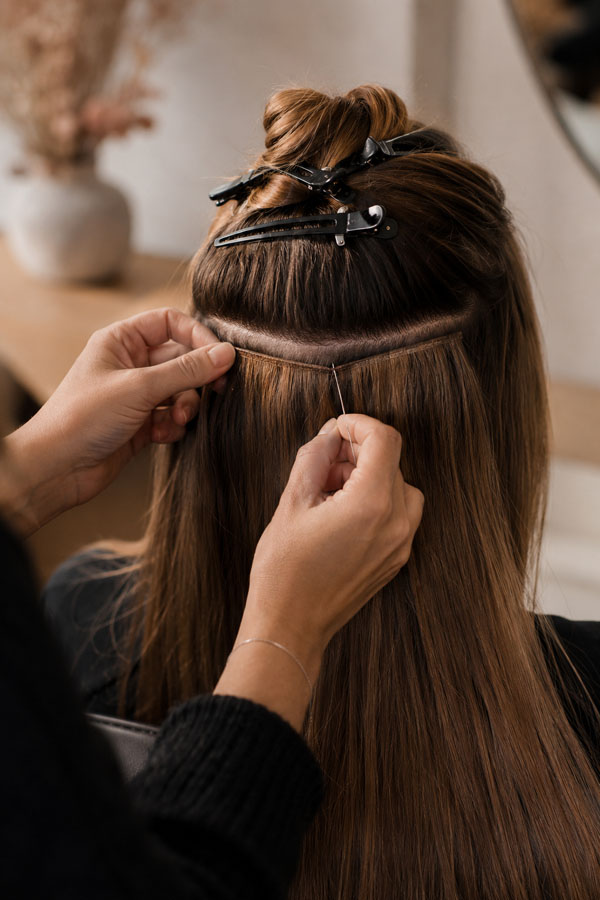
03 Hair being sectioned and clipped into a working pattern before extensions are fitted

Your head gets mapped and sectioned

This is the part that decides how the finished thing looks, and it happens before a single piece of hair goes in. The hair is parted and clipped into a working pattern, and the rows get placed against your head shape and where your own density actually sits, not against a standard layout.

It is also where the two odd questions from your intake form come back: the high ponytail and the workouts. Both change where a row can safely sit, and this is the moment that gets designed around.

Your part: say now if you part your hair a particular way. It is much easier to plan for than to fix.

04 A client seated with her hair sectioned and clipped while a weft row is fitted behind her

The rows go in, and this is the long bit

The bulk of the appointment. Row by row, working up the head, and it is quiet, repetitive work that cannot be hurried without showing later. You will feel a firm steady tension at the scalp and it should never be sharp. If it is, say so, because that is information rather than complaining.

You can be on your phone the whole time. People watch things, answer emails, or talk. Some fall asleep. There is no expectation either way and no small talk required if you would rather have the afternoon to yourself.

Your part: eat beforehand, and speak up about anything that pinches.

05 Extension hair being cut and blended into the client’s own length at the end of install day

It gets cut in, and this is where it becomes yours

The hair goes in blunt and all one length, because it has to. The cut is what turns two lengths into one head of hair: layers cut through your own hair and the added hair together, weight taken out where your hair is finer, ends softened.

It happens now, at the end of this same appointment. Going home to wait for a second one is exactly how people end up believing extensions look obvious, because for those few days they do.

Your part: say what you actually want while there is still length to play with.

06 A client seeing her finished hair extensions in the studio mirror

It gets dried and styled, and then you look

Blown out and finished properly, so you leave looking the way it is meant to look rather than working it out yourself the next morning. This doubles as the handover: how it behaves, what it wants, which products are worth buying and which are not.

Then you look in the mirror, which is a bigger moment than people expect and occasionally not a dry one.

Your part: book your first move-up before you leave, four to six weeks out.

And then, every four to six weeks

A move-up is a much shorter version of the same afternoon. One to two hours, the same chair, the same room. The rows come down, everything gets washed and properly seen, and the same hair goes back up where it belongs.

It is repetitive in the good sense. By the third one you will know exactly how long it takes and what to bring, and it stops being an appointment you think about.

See what maintenance actually involves →

The three questions that come up every time

Am I signing up for a salon appointment every four weeks for the rest of my life?

You are signing up for a few hours every couple of months. Set against that, most people getting ready in the morning with hair they are trying to fake volume into are spending twenty to thirty minutes a day on it. Over a year that is more than 120 hours, and the result is still one they do not love.

The move-up is real and it is in the calendar. It is also the smaller number.

Will this damage my own hair?

The fear usually comes from older, heavier methods, or from something someone watched happen to a friend. Weight distribution is the thing that actually matters, and modern wefts are light and sit flat rather than hanging off a few strands.

It is also why the audit happens first and why the elasticity test exists. The aim is to protect the hair you have while you are wearing extensions, and if your hair is not in a state to carry them, that is a conversation at the audit rather than a problem six months later.

Will people be able to tell?

This is the one people ask last and worry about most, usually phrased as what happens in a high ponytail or in wind.

Two things answer it. The tops of the wefts are ultra-thin, so there is no ridge to find. And placement is mapped to your head shape and your density rather than to a standard row pattern, which is what the intake form questions about workouts and ponytails are for. When someone realises the layout was built around how she actually wears her hair, the question tends to stop being a question.

All of that starts with one shorter appointment

The consultation is $50, about 45 minutes, applied to your install. Everything on this page happens after it.

Leave your number and I will call you to arrange it.